Jupiterswap app Is a Practical Guide to Wallet Setup and Token Swaps
Jupiterswap app Is a way to understand how a decentralized swap workflow can work on Solana: connect a compatible wallet, choose the tokens, review the quoted route, check fees and slippage, then approve the transaction only if the details match your intent. It is not a promise of profit or a substitute for research. Jupiterswap app should be approached as a practical DeFi tool where careful verification matters before every swap.
Jupiterswap app is commonly searched by people who want a plain explanation before they connect a wallet or move assets. The name is often used informally for Jupiter’s swap interface and related app experience, but users should always confirm they are using the official service and not a lookalike page. In DeFi, a familiar logo or similar domain is not enough. The safer habit is to verify the address, inspect wallet prompts, and understand what each approval means.
Jupiterswap app fits into the wider category of decentralized exchange aggregators. Instead of requiring a user to visit one liquidity pool at a time, an aggregator compares available routes and attempts to find an efficient path for a token trade. That can involve direct liquidity, split routing, wrapped assets, stablecoins, or other Solana-based tokens. The practical value is convenience, but convenience does not remove market risk, execution risk, or the need to check official information.
What is Jupiterswap app?
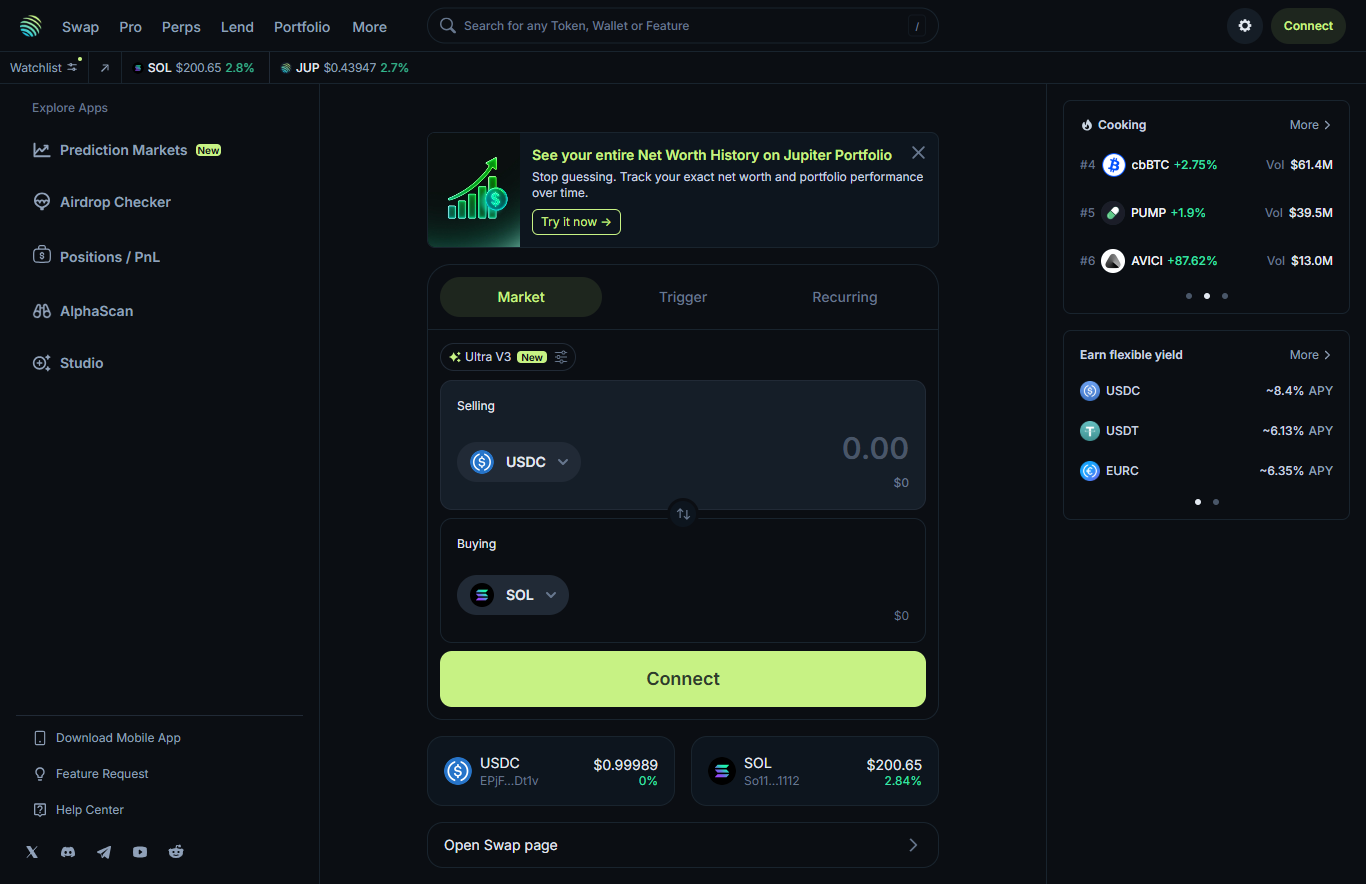
Jupiterswap app is best understood as a user-facing swap experience for people who want to exchange one crypto asset for another without using a traditional centralized exchange order book. A user keeps control of a self-custody wallet, connects that wallet to the application, and signs transactions from the wallet interface. The app can display quotes, estimated output, price impact, route information, and transaction details before the user decides whether to proceed.
Jupiterswap app is not a bank account, brokerage account, or guaranteed-return product. It is a DeFi interface connected to blockchain activity. The assets remain tied to the user’s wallet and to the rules of the tokens, programs, and networks involved. For a new user, that difference matters because there is usually no customer-service reversal if a transaction is signed incorrectly, a fake token is selected, or a malicious site receives wallet permission.
Jupiterswap app may feel simple because the main action is a swap form, but the underlying process can be technical. A quote may depend on liquidity depth, market volatility, the token pair, routing, and network conditions. Tokens with thin liquidity can move sharply during a transaction, while popular pairs often have deeper markets. Jupiterswap app can make the workflow easier to read, but users still need to understand what they are trading and why.
How does Jupiterswap app work for token swaps?
Jupiterswap app works by letting a user request a quote for a specific input token and output token. The interface estimates what the user may receive, often using routes across available liquidity sources. A route can be simple when one pool has enough liquidity, or more complex when the trade is divided across multiple paths. The user then reviews the quote and approves the transaction through a wallet if the terms are acceptable.
The protocol side of this experience depends on blockchain transactions. When a user confirms a swap, the wallet shows a transaction request that may include token movements, program interactions, and network fees. Jupiterswap app does not remove the need to read that request. In practice, a careful user checks the token symbols, token addresses when needed, estimated output, slippage tolerance, and any warning messages before signing.
Jupiterswap app can also expose concepts that are common across DeFi. Price impact describes how much a swap may move the market compared with the quoted price. Slippage tolerance defines how much the final execution can differ from the quote before the transaction fails or proceeds within the accepted range. Network fees are usually separate from the swap quote, and they vary by chain conditions. These details should be reviewed every time.
How to set up a wallet before using Jupiterswap app
Jupiterswap app starts with wallet preparation, not with the swap button. A user needs a compatible self-custody wallet, enough of the network’s native token to cover transaction fees, and a clear plan for which asset they want to trade. Wallet setup should be slow and deliberate. The recovery phrase or private key controls the wallet, and anyone who obtains it can generally move the assets without permission.
Jupiterswap app users should separate routine browsing from wallet activity where possible. Many people prefer to use a dedicated browser profile, a hardware wallet for larger balances, or a fresh wallet for testing smaller transactions. Those choices do not eliminate risk, but they can reduce the damage from a mistaken approval or a compromised device. A simple internal guide to can help beginners understand the steps before connecting to any DeFi application.
Jupiterswap app also requires attention to the correct network and the correct token. On Solana, tokens can share similar tickers or names, and unofficial tokens may appear in search results. The safest approach is to verify token addresses through reliable sources before trading unfamiliar assets. If a token appears only through a random message, sponsored post, or unsolicited link, it deserves extra caution. DeFi rewards speed, but security often comes from slowing down.
How to use Jupiterswap app step by step
Jupiterswap app can be approached through a simple workflow. First, the user opens the verified app location and connects a wallet. Next, the user selects the token they want to spend and the token they want to receive. Then they enter an amount, review the estimated output, inspect the route, and check slippage settings. The final step is confirming through the wallet only after the transaction details look correct.
For a new user, the first transaction should usually be small enough to learn the process without risking a meaningful balance. Jupiterswap app can make a swap feel immediate, but the result is still a real blockchain transaction. A test trade helps the user see how wallet prompts appear, how long confirmations take, and where the received token shows up afterward. This is especially useful when working with a new wallet or a token that has not been imported before.
Verify the app address and avoid links from unsolicited messages.
Connect a wallet with only the funds needed for the intended activity.
Select the input and output tokens, checking addresses for unfamiliar assets.
Review the quote, route, fees, price impact, and slippage tolerance.
Confirm in the wallet only if the transaction request matches the expected swap.
Jupiterswap app users should also know what to do after a trade. The received token may not appear in every wallet interface automatically, especially if the asset is uncommon. The user may need to add or display the token manually in the wallet. A separate walkthrough can be useful for understanding the difference between a completed transaction and a wallet display issue.
Fees, slippage, and price impact in Jupiterswap app
Jupiterswap app can show several cost signals, and each one means something different. Network fees pay for blockchain transaction execution. Swap pricing reflects liquidity and market conditions. Price impact reflects how much the requested trade may affect the available market. Slippage tolerance sets the maximum difference a user is willing to accept between the displayed quote and the executed result. None of these should be ignored.
Jupiterswap app may find a route with a better estimated output than a single liquidity source, but a quote is still an estimate until execution. Markets can change between the moment a quote appears and the moment a transaction confirms. Larger trades, newly launched tokens, or thin liquidity pairs may require extra review because the visible output can shift more dramatically. A low fee does not automatically mean a good trade if price impact is high.
Item to review
What it means
Why it matters
Network fee
Cost paid to process the transaction
The wallet needs enough native token to complete the swap
Estimated output
Approximate amount expected after the trade
This is the main value the user should compare before signing
Slippage tolerance
Allowed change between quote and execution
Too high may accept a worse result; too low may fail in volatile markets
Price impact
Trade effect on available liquidity
High impact can make a swap inefficient or risky
Jupiterswap app should be used with the same discipline as any trading tool. Users should not assume that a route is ideal for every trade size or every token. Checking the numbers is part of the workflow, not an optional advanced feature. When the values look confusing, pausing is usually better than approving a transaction that cannot be reversed.
What are the main use cases for Jupiterswap app?
Jupiterswap app is mainly used for swapping tokens, but that simple use case covers several common situations. A user may want to move from a stablecoin into a Solana ecosystem token, convert a token back into a more liquid asset, rebalance a wallet, or test a small position in a project. Jupiterswap app can also help users compare available routes without manually checking many decentralized exchanges.
Jupiterswap app can be useful for people who want a self-custody workflow rather than depositing funds into a centralized platform. That does not make it automatically safer; it changes the type of responsibility. Centralized exchanges require account trust and platform custody, while DeFi swaps require wallet security, transaction review, and token verification. The right choice depends on the user’s goals, experience, and risk tolerance.
Jupiterswap app may also be part of a broader Solana DeFi routine. Some users swap assets before participating in staking, liquidity provision, NFT purchases, payments, or portfolio rebalancing. Those activities introduce separate risks. For example, liquidity pools can involve impermanent loss, smart contract exposure, and changing reward terms. Jupiterswap app can help with asset conversion, but it does not validate the quality of every project a user might buy.
Is Jupiterswap app safe to use?
Jupiterswap app can be used more safely when the user treats every step as a verification step. The biggest risks often come from fake sites, fake tokens, malicious approvals, compromised wallets, and careless signing. Even a legitimate DeFi interface cannot protect a user who signs a harmful transaction from the wrong page. Safety starts before connection and continues through every wallet prompt.
Jupiterswap app users should verify details with official sources, especially because interface names, supported assets, and features can change over time. This article is informational and should not be treated as financial advice. Crypto prices can be volatile, and decentralized transactions can be final. A user should never trade money they cannot afford to lose, and they should avoid making decisions based only on social hype, screenshots, or claims of guaranteed returns.
Jupiterswap app risk management is practical rather than complicated. Keep recovery phrases offline. Use strong device security. Consider a hardware wallet for larger holdings. Avoid approving unlimited permissions unless there is a clear reason. Disconnect sites that are no longer needed. Test unfamiliar workflows with small amounts. Check token addresses before swapping. These habits reduce common mistakes, though they cannot remove all DeFi risk.
How does Jupiterswap app compare with other swap tools?
Jupiterswap app belongs to a family of swap interfaces, decentralized exchanges, and aggregators. Some tools focus on one liquidity pool, some focus on order books, and others route across many sources. The useful comparison is not simply which interface looks easier. A user should compare liquidity, route quality, supported tokens, transparency, wallet compatibility, transaction reliability, and the clarity of risk information.
Jupiterswap app may appeal to people who want routing across Solana liquidity without leaving the wallet-based DeFi environment. A centralized exchange may be easier for fiat deposits, account history, tax exports, or customer support, but it usually requires custody of funds and identity checks. A single DEX pool may be straightforward, but it may not produce the best route for every pair. Each model solves a different problem.
In practice, Jupiterswap app is often evaluated by the quality of the quote and the confidence a user has in the transaction. If a route looks inefficient, if price impact is unusually high, or if a token cannot be verified, another path may be better. Good DeFi usage is not loyalty to one button. It is the habit of comparing information and acting only when the trade makes sense.
What should beginners know before relying on Jupiterswap app?
Jupiterswap app can be approachable for beginners, but beginners should not confuse approachability with simplicity of risk. A swap form hides many moving parts: wallet custody, token programs, routing logic, liquidity depth, market volatility, and final settlement. The first goal should be learning the mechanics, not chasing speed. A user who understands the workflow is less likely to approve the wrong transaction under pressure.
Jupiterswap app also requires a different mindset from a normal app login. There may be no username, password reset, or account recovery if the wallet seed phrase is lost. There may be no reversal if funds are sent to the wrong place. This is why wallet backups, official-source verification, and small test transactions are not extra tasks. They are part of responsible self-custody.
Jupiterswap app is most useful when paired with patient habits. Read the quote. Check the route. Watch the slippage setting. Verify the token. Keep enough network token for fees. Avoid acting on urgency. If a project claims that users must swap immediately to receive a guaranteed benefit, that pressure itself is a warning sign. DeFi opportunities change quickly, but irreversible mistakes can happen even faster.
Using Jupiterswap app with realistic expectations
Jupiterswap app is a practical gateway into Solana token swaps, but it should be treated as a tool rather than a shortcut to returns. Its value comes from helping users compare routes and execute wallet-based swaps with clearer information. The user still carries responsibility for wallet security, token selection, fee review, and risk control. That responsibility is the tradeoff of self-custody.
Jupiterswap app can serve both new and experienced users when the workflow is handled carefully. New users can learn by starting small, while experienced users can pay closer attention to routing, slippage, and market depth. In both cases, the best habit is the same: verify with official sources, understand the transaction before signing, and avoid treating any DeFi interface as a guarantee. Jupiterswap app is useful because it can organize the swap process, but the final decision belongs to the wallet owner.
Reader rating:
4.9 / 5
based on 454 ratings
Questions and Answers
What is Jupiterswap app used for?
Jupiterswap app is used to understand and perform token swaps through a wallet-based DeFi workflow, commonly associated with Jupiter’s swap experience on Solana. A user connects a compatible wallet, selects the tokens, reviews the quoted output, checks route details, and approves the transaction from the wallet. It is an informational and transactional tool, not a guarantee of profit or a replacement for independent research.
Do I need a crypto wallet to use Jupiterswap app?
Yes, Jupiterswap app requires a compatible self-custody crypto wallet because swaps are approved through wallet transactions. The wallet holds the user’s assets and signs the swap request. Before connecting, users should back up their recovery phrase offline, verify the official app location, keep enough native network token for fees, and consider testing with a small amount before making larger transactions.
How do fees work in Jupiterswap app?
Fees around Jupiterswap app can include network transaction fees and the market cost reflected in the swap quote. Users should also review price impact and slippage tolerance, because those can affect the final received amount. A low network fee does not always mean a good trade if liquidity is thin or price impact is high. Every quote should be reviewed before signing.
Is Jupiterswap app safe for beginners?
Jupiterswap app can be approachable for beginners, but it still involves real blockchain transactions and self-custody risk. Beginners should verify official sources, avoid links from unsolicited messages, check token addresses for unfamiliar assets, and start with small test swaps. Safety depends heavily on wallet security and careful transaction review. Crypto transactions can be final, so users should not rush approvals.
What should I check before confirming a swap in Jupiterswap app?
Before confirming a swap in Jupiterswap app, check the input token, output token, estimated amount received, route, network fee, price impact, and slippage tolerance. Also inspect the wallet prompt to confirm it matches the intended action. If the token is unfamiliar, verify its address through reliable sources. If anything looks inconsistent or confusing, it is better to pause than approve the transaction.
Can Jupiterswap app guarantee the best token price?
No. Jupiterswap app may help compare routes and display an estimated output, but no DeFi interface can guarantee the best final price in every market condition. Quotes can change before execution, especially with volatile assets or low-liquidity pairs. Users should compare details, understand slippage, and avoid assuming that any single quote is risk-free or permanently available.
How is Jupiterswap app different from a centralized exchange?
Jupiterswap app is wallet based, so users generally keep custody of their assets and approve transactions directly from their wallet. A centralized exchange usually holds user funds in an account and may offer fiat deposits, customer support, and account tools. The DeFi model gives more direct control, but it also places more responsibility on the user for security, verification, and transaction accuracy.
Jupiter Swap acts as a decentralized exchange (DEX) designed for swapping various cryptocurrencies seamlessly. Its growing popularity stems from the innovative solutions it offers for liquidity and transaction efficiency. By leveraging smart contracts, traders can execute transactions at high speeds while maintaining security.
What Sets Jupiter Swap Apart?
The uniqueness of Jupiter Swap lies in its integration with various blockchain networks, offering users flexibility and a wide range of asset options. Unlike centralized exchanges, Jupiter Swap minimizes counterparty risk, which appeals to users looking for more secure trading environments. Additionally, its intuitive design caters to both novice and experienced traders.
Benefits of Jupiter Swap
Opting for Jupiter Swap for trades comes with several advantages:
Lower transaction fees compared to traditional exchanges.
Fast and secure transactions using blockchain technology.
Access to a diverse range of cryptocurrencies and tokens.
User-friendly interface suitable for all skill levels.
Enhanced privacy, as no personal information is required.
How to Use Jupiter Swap
Getting started with Jupiter Swap is straightforward. Users need to connect their crypto wallets, select the trading pair they want, and execute the swap. The platform provides real-time data on prices, making it easier to make informed decisions. It’s recommended to familiarize yourself with the interface and available trading tools to maximize your efficiency.
A Comparison with Other Exchanges
When comparing Jupiter Swap with other trading platforms, several factors come into play, such as fees, supported assets, and user experience. Here’s a quick comparison: